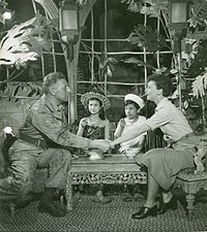
 Nellie accepting her lover’s biracial children in finale of South Pacific.
This was orginally written for Jamie Anderson's Blog in 2015! Check it out!
Music is powerful. That’s why I like to write musicals. I think of the Rogers and Hammerstein musical South Pacific, and how, in 1949, its themes of interracial marriage were considered too risky for Broadway — until after the show had proven itself in London! I think of how nearly every song in that show made it to the Hit Parade on the radio: “Bali Ha’i”, “I’m Gonna Wash That Man Right Outa My Hair”, “Some Enchanted Evening”, “There Is Nothing Like a Dame”, “Happy Talk”, “Younger Than Springtime” and “I’m in Love with a Wonderful Guy.” The entire nation, racists and all, hummed happily along to the score of this musical.
Music is powerful. That’s why I like to write musicals. I think of the Rogers and Hammerstein musical South Pacific, and how, in 1949, its themes of interracial marriage were considered too risky for Broadway — until after the show had proven itself in London! I think of how nearly every song in that show made it to the Hit Parade on the radio: “Bali Ha’i”, “I’m Gonna Wash That Man Right Outa My Hair”, “Some Enchanted Evening”, “There Is Nothing Like a Dame”, “Happy Talk”, “Younger Than Springtime” and “I’m in Love with a Wonderful Guy.” The entire nation, racists and all, hummed happily along to the score of this musical.
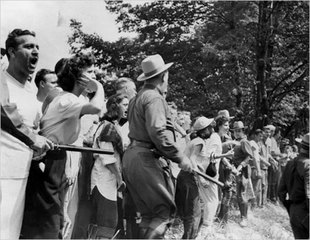 The Peekskill Riot in 1949 at a Paul Robeson concert in NY.
What about the time? By 1948 soldiers returning home from the war were increasingly unwilling to accept the lack of freedom and equality in their homeland— a country that held itself up to the world as a bastion of democratic process.
The year before South Pacific premiered, segregation in the military and discrimination in civil service jobs were declared illegal, and the stage was set for one of the most powerful and violent civil rights movements in history. Did South Pacific reflect a collective readiness to confront racism, or did it actually serve as a cultural wedge to pry open the doors of consciousness? Audiences could not take those lush melodies and haunting lyrics to heart without also letting in the message of the play: Life is too short and too precious to waste it on artificial boundaries that prevent us from loving.
The year before South Pacific premiered, segregation in the military and discrimination in civil service jobs were declared illegal, and the stage was set for one of the most powerful and violent civil rights movements in history. Did South Pacific reflect a collective readiness to confront racism, or did it actually serve as a cultural wedge to pry open the doors of consciousness? Audiences could not take those lush melodies and haunting lyrics to heart without also letting in the message of the play: Life is too short and too precious to waste it on artificial boundaries that prevent us from loving.

A lyricist has responsibilities. Music, if it’s good, will lodge itself in the brain of the listener. It will seduce us with rhythms and syncopations. It will manipulate us emotionally with a melody that can soar and plunge, hold us in suspense, and release us with closure. The brain will forever associate the lyric with the music — hence the phrase “earworm.” Wikipedia defines “earworm” as “a catchy piece of music that continually repeats through a person’s mind after it is no longer playing.” Synonyms include “musical imagery repetition,” “involuntary musical imagery,” and “stuck song syndrome.”
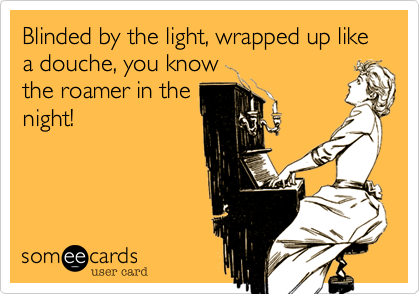
Let’s look at Springsteen’s “Blinded By the Light.” Manfred Mann altered one simple lyric, changing “cut loose like a deuce” to “revved up like a deuce,” and forever after millions have wondered what it means to be “wrapped up like a douche.” Springsteen jokes that the song did not achieve popularity until Mann rewrote it to be about a feminine hygiene product.
Responsibility, people.
But deuces/douches aside, what’s up with 99% of popular music being about sex or compulsion? Popular music appears to be one endless booty call. What effect does this have on us, that every earworm would direct our attention toward lust or codependency? And … as a true child of the sixties, I have to ask the question “Who benefits from that?”
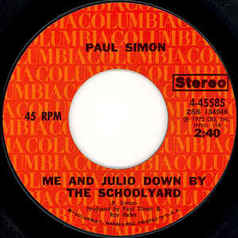
Well, heterosexuals would appear to, because I rarely hear a song on the radio about lesbian or gay couples. Yes, there are gender ambiguous songs, like Melissa Etheridge’s “Come To My Window,” but the more explicit ones never seem to get on the national radar. In fact, the only one I can think of in the moment is “Me and Julio Down By the Schoolyard” by Paul Simon. 1972, nearly a half-century ago. It was a song about boys caught fooling around, doing something that mama saw that was against the law. Asked by Rolling Stone, “What is it that the mama saw? The whole world wants to know,” Simon replied “I have no idea what it is… Something sexual is what I imagine, but when I say ‘something,’ I never bothered to figure out what it was. Didn’t make any difference to me.” His indifference was radical at the time.
 Because that looks so comfortable...
Okay, but sexual orientation aside, these ubiquitous sex-and-compulsion songs appear to me to be written to reflect male fantasies. Female sexual empowerment is equated with a woman’s ability to play into these fantasies.
But, seriously, orientation and gender aside, who benefits from a nation whose earworms are obsessed with sex? Aren’t there other things we could be singing about?
But, seriously, orientation and gender aside, who benefits from a nation whose earworms are obsessed with sex? Aren’t there other things we could be singing about?
Well, yes. In country music, we have mama, trucks, and prison. In folk music, we have a wide array of social justice issues.
But… musicals… ah, musicals. This is a lyricist’s playground. Songs that reflect character, that move the plot forward, that are true to the dramatic moment. Songs that capture the feel of an era, or the flavor of a culture. And all of this filtered through the experience and personality of the lyricist.
But… musicals… ah, musicals. This is a lyricist’s playground. Songs that reflect character, that move the plot forward, that are true to the dramatic moment. Songs that capture the feel of an era, or the flavor of a culture. And all of this filtered through the experience and personality of the lyricist.
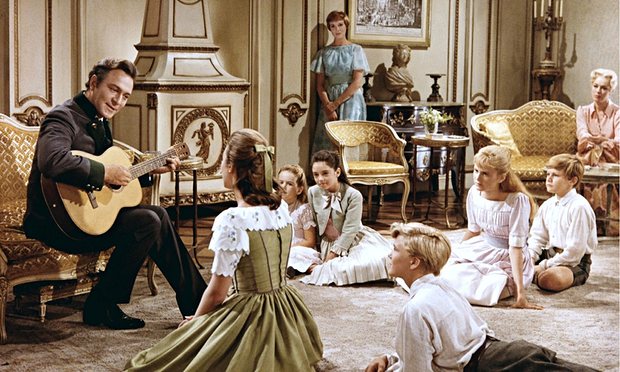
Take The Sound of Music. Oscar Hammerstein was dying when he wrote the lyrics for the show. In fact, he wrote some of it from his bed. The last song he ever wrote was “Edelweiss,” which was inserted late into the second act. “Small and white, clean and bright…” A simple, simple lyric, but one that focuses attention on a wildflower when an evil world of fascism is rapidly bearing down on a small country, when the “Anschluss” of chronic physical pain is launching an assault on all the senses.
The Sound of Music is a musical about appreciation of life, with lyrics by a man who was about to leave it. Here is Hammerstein right from the heart: “My days in the hills have come to an end, I know / A star has come out to tell me it’s time to go / But deep in the dark green shadows are voices that urge me to stay / So I pause and I wait and I listen for one more sound, for one more lovely thing that the hills might say.”
And he goes on to write about favorite things, about climbing every mountain, about having confidence, about having done something good in one’s life, about how love can survive…. And then he sums it all up with that single, simple white flower… “Small and white, clean and bright/You look happy to me…”
Hammerstein writes the songs that he is needing to hear. Romance, as opposed to lust. Romance — that feeling of excitement and mystery toward what one loves, in this case the natural world and its simple wonders.

 RSS Feed
